
Vision & Goals
Our Vision: Understanding plasticity to transform treatment
Myeloid malignancies such as acute myeloid leukemia (AML) evolve constantly. Their cells adapt, hide, resist therapy – and eventually return. This ability to change, known as cellular plasticity, is one of the biggest challenges in modern cancer treatment.
The Collaborative Research Center CRC 1709 – Cellular Plasticity in Myeloid Malignancies brings together leading basic scientists and clinicians to understand how this plasticity arises, how it drives disease progression and resistance, and how it can be targeted for better therapies.
Cancer cells do not only change because of genetic mutations. They also undergo non-genetic, reversible shifts in identity, metabolism, and behavior. These dynamic changes help them survive stress, escape therapies, and return after remission.
CRC 1709 aims to:
- Decode the mechanisms that shape cellular plasticity in myeloid malignancies
- Map plasticity across disease stages – from pre-malignant states to relapse
- Understand microenvironment interactions that influence plastic behavior
- Develop therapeutic strategies that block or exploit plasticity
- Build a comprehensive, shared data and technology platform for the research community
Our ultimate goal is to turn the concept of plasticity from a challenge into an opportunity: a new angle to treat cancers that currently remain incurable.
Goals
Our Main Goals
This program will provide novel insights into the underlying etiology of cancer cell plasticity that we envisage will hold relevance beyond the sphere of hematologic malignancies, and will pave the way for new therapies which tackle this unmet clinical problem.
Identify intrinsic drivers
We investigate how molecular mechanisms inside cancer cells—epigenetics, RNA modification, metabolism—activate and regulate plasticity.
Understand extrinsic influences
We analyze how external factors such as inflammation, therapy stress, and the bone marrow niche shape cancer cell states.
Track plasticity during disease evolution
Using cutting-edge single-cell and multi-omics technologies, we monitor how malignant cells change from diagnosis to relapse.
Reveal therapy-induced adaptation
We study how cancer cells react to chemotherapy, targeted therapy, and immunotherapy — and how these responses drive resistance.
Target vulnerabilities created by plasticity
We search for weak points that only appear in plastic states and may offer new therapeutic entry points.
Our core projects integrate multi-omics, proteomics, AI-based analyses, and clinical biobanking to enable research at unprecedented depth.
Consortium & Structure
This is how we are organized
CRC 1709 unites experts from Heidelberg, Mannheim, Berlin, Munich, Frankfurt, and international research institutes. Our structure combines:
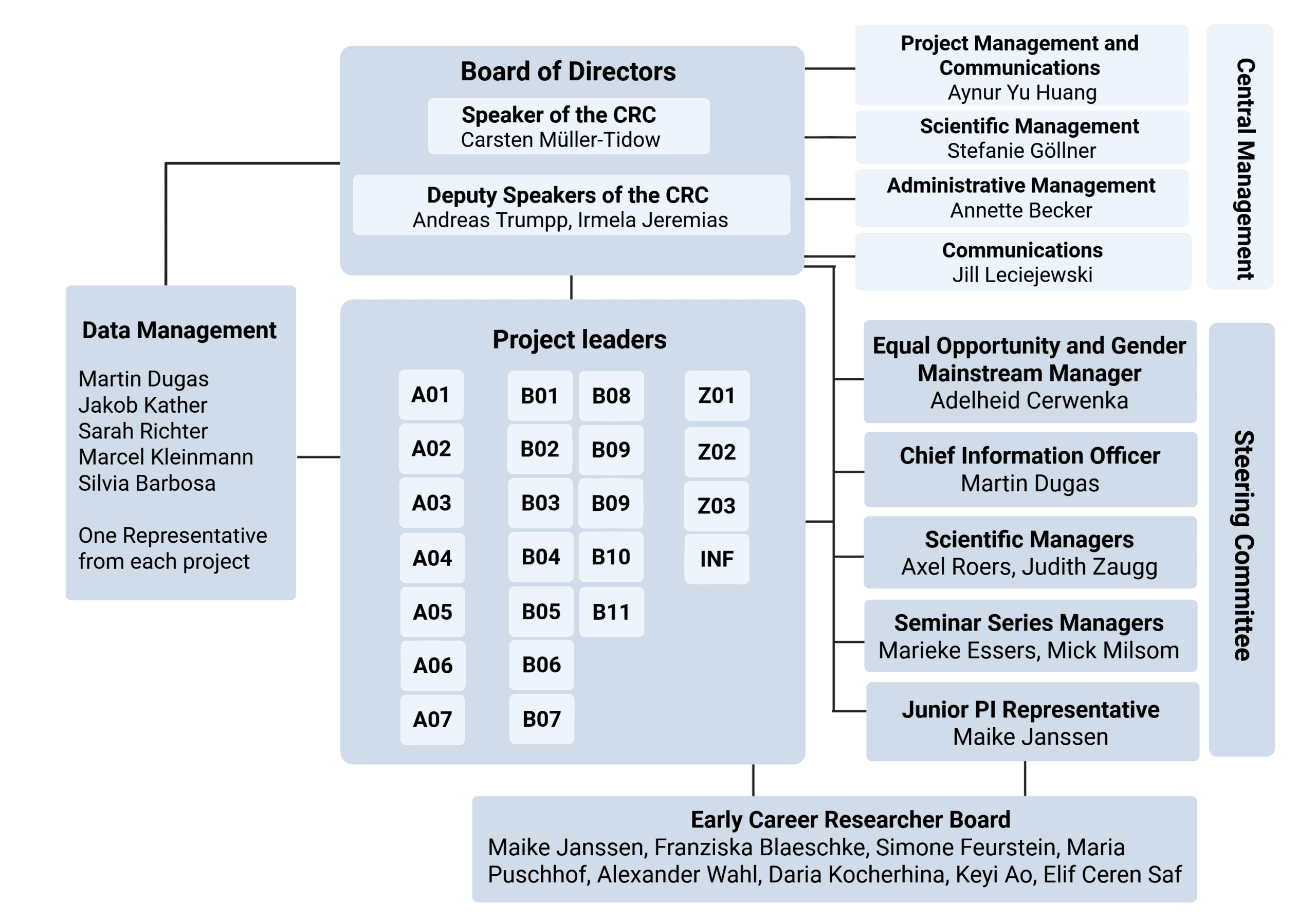
Team & Partner
Have a look at our Team
Our CRC brings together more than 30 principal investigators, early-career researchers, and experts from leading institutions.

Lukas Schmitt

Yujian Xu
Anuraag Ghosh

Keyi Ao

Eleni Besiridou
Dr. Emilija Marinkovic
Events
Advancing cancer research through collaborative events
SFB 1709 hosts seminars, workshops, and symposia that bring together experts from basic science, clinical research, computational biology, and translational oncology. These events foster interdisciplinary exchange, highlight emerging insights into cancer cell plasticity, and support the development of innovative therapeutic approaches.
By decoding the plasticity of myeloid malignancies, we aim to fundamentally change how we understand and treat aggressive blood cancers.

Prof. Carsten Müller-Tidow
Spokesperson, CRC 1709 – Cellular Plasticity in Myeloid Malignancies